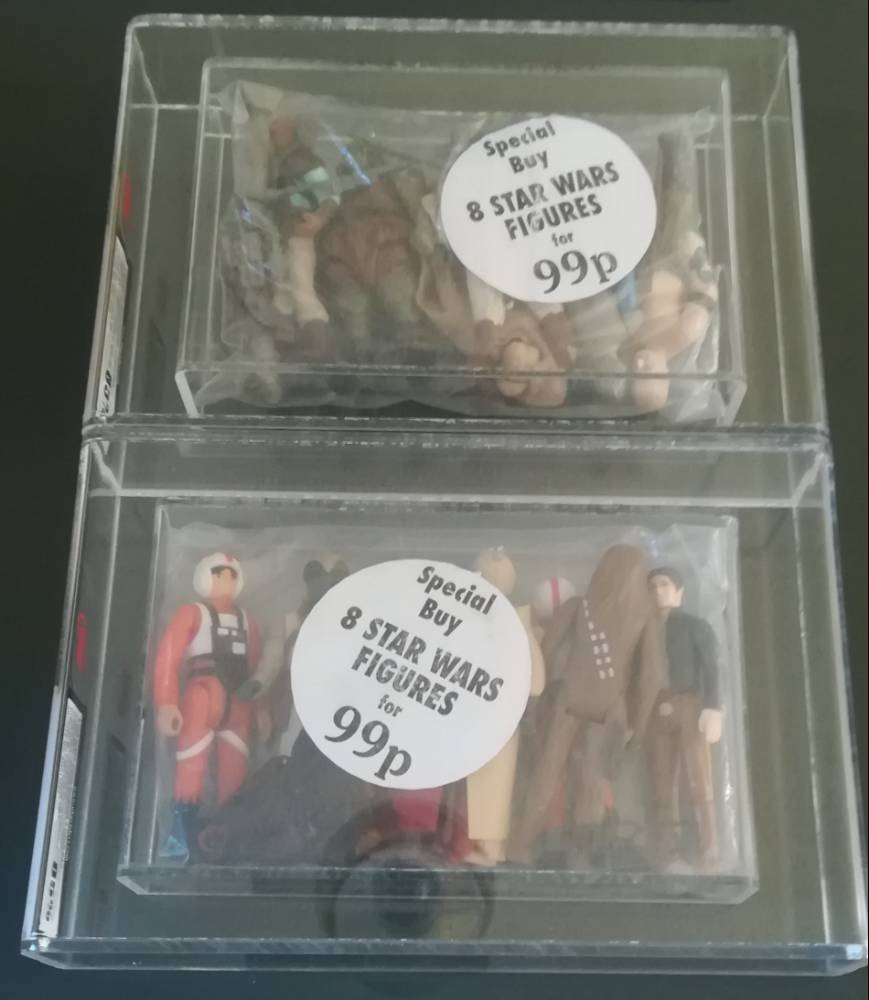
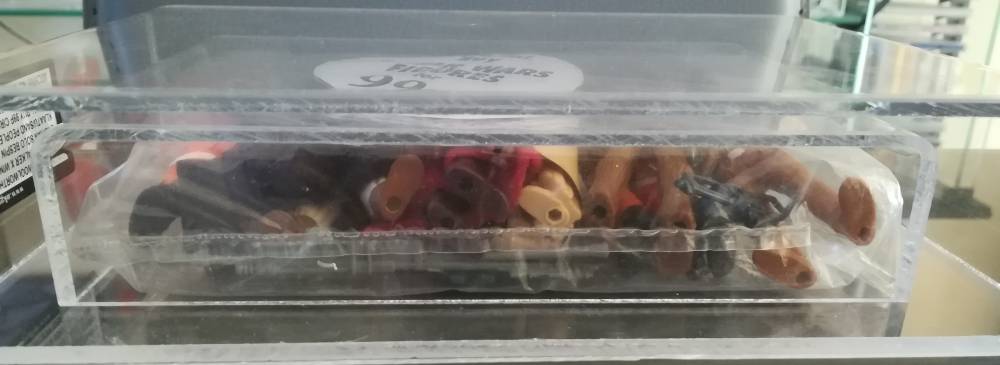
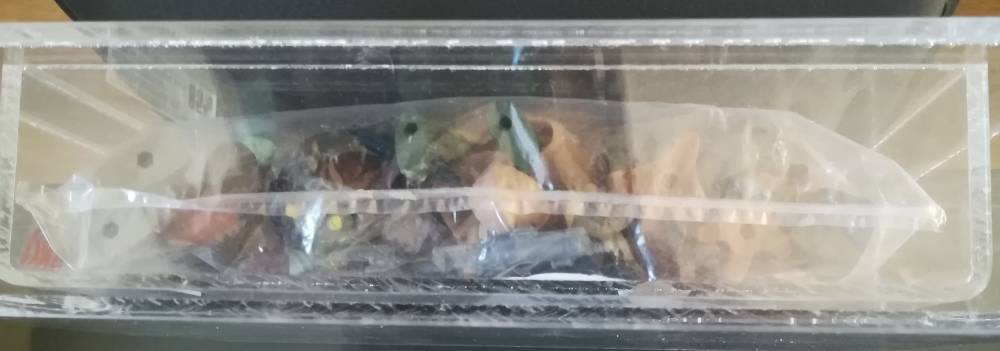
Firstly, I believe there is now evidence that Woolworth's did not create these packs, Palitoy did. I can't remember exactly where I read that, hopefully Laurence can elaborate. But I do know stickered Special Buy packs have been found from other sources, eg Toy Toni has loads of Bandolier packs still to this day. So I believe UKG's assessment of the pack with the receipt roll in it may be wrong, although I commend them for not giving it a grade.
is it this info Edd i had gathered a few years back when discussing the packs with a Woolworths manager who was around at the time of the original Special Buy sales in Autumn & winter 1985?
"Hi Kevin
Thanks for your emails. Back in 1985 Woolworths pioneered the idea of a 'half price toy sale', which is commonplace today, but was wholly new at the time. With 21% of the toy market at the time (and a rather larger share of cheaper items like action figures), the chain had a dominant market share in the UK and as such the key suppliers were very keen to help, taking the opportunity to clear lumpy, surplus and problem stocks, often to retail at much less than half price. The first of these toy sales was in September 1985, running for the three weeks leading up to half term. Half term traditionally marked the day that Woolworths stores went onto Christmas layout (withdrawing gardening, most home essentials, and vastly expanding the toys offer, and introducing Xmas Decs and Wrapping Paper). It was felt that the Toy Sale at this time would be a useful way of splitting the counter moves involved and attracting lots of extra traffic, with those shoppers hopefully tempted to buy the new Christmas lines at full price while they were visiting. It was such a hit that a further half price toy sale was TV Advertised for December 27th, allowing mainly bulky half price toys to fill the spaces left as the Christmas Decs and Cards sold out. The pattern of Half Toy Sales in September/October and again at the end of December into mid January continued every year into the 2000s.
For what it's worth, virtually none of the toys sold in the sale were from the chain's own stock. The merchandise (much of which we had never stocked) was price established for six weeks in the Luton Arndale at the higher price about three months before the event, but was either delivered pre-packed and priced by the suppliers directly, or more usually through Woolworths' own Distribution Centres in Swindon and Castleton, Rochdale.
On the figure packs you were asking about. From what I remember, Woolworth was Kenner Parker Inc's largest European stockist when that company was spun off in 1985. One of the reasons (as I understand it) that General Mills had decided to ditch those two divisions and float them off separately was because (unusually) they operated sale or return terms on their toys. For the retailer this meant that instead of having to guess how well new character ranges would sell and either run out and lose sales because they under-estimated or land up with a lot dead stock to bury if the character brand bombed, chain stores could order huge quantities in the hope of good sales and then send back any stock they considered to be surplus once the sales pattern (or lack of it) was established. The trouble was that returned sale-or-return stock was often ex-display and many of the items sold on hanging cards would be returned dog-eared around the edges and torn where the hole was for the pegboard hook. (Showing that store staff had pulled them all of the hook at once, when 'universal arms' are designed to reduce shoplifting by forcing you to remove each one individually, otherwise they tear the packaging.
Kenner Parker had launched a new Star Wars range in 1985 to accompany a spin-off animated TV series, with the models tweaked to look like the animated rather than 'real life' characters. The UK had high expectations for the series when it aired, because it had proved popular in the USA, and retailers went heavy on the figures. Sales were OK but not spectacular in the UK, and from what I remember retailers got very uncomfortable when the figures were included in a media storm about new European Toy Safety legislation which was announced in 1985, with a long transitional period leading to enforcement from 1990. Several press reports used the Kenner Parker carded figures as an exemplar of non compliant products. For example:
- they didn't show the importers name and address (a new legal requirement)
- they didn't have a prominent warning about small parts
- they did not clearly state that they presented a choking hazard and were unsuitable for children under 36 months, and should only be used under supervision by pre-schoolers
- etc.
You can imagine how uncomfortable it would be if you were asked 'why are you selling these dangerous toys, Mr Argos? or whatever, even though of course they had simply been manufactured before the regulations were agreed.
As a result Kenner Parker had extremely heavy returns from what Woolworth would call 'the outside trade' (i.e. everyone else), while Woolies kept their nerve and saw sales of their own full-priced stocks rise as other retailers went out of stock.
To cut a long story short, faced with dog-eared packaging that had been criticised in the media, I think Kenner Parker came up with the idea of paying pieceworkers to rip all the figures off the cards and put them in plain packaging, and offered the line to Woolies for the Toy Sale. Despite the low price of your items, Woolworth actually had a > 65% gross margin on the line, and sold all of the stock they could get within a week. The promotion solved a problem for Kenner Parker Inc, earned Woolies some Brownie points for the next season's buying, and gave some lucky kids a great bargain. (The latter always assuming the child was over three, and didn't think the figures were edible.) To be on the safe side, stores were instructed to display a disclaimer ticket in front of the display of figures warning of small parts, the age restriction, and saying the importer's name and address was available on request.
All labelling was done by the supplier. WW calculated that at this time they made 5p extra profit per single if the labels were affixed at source rather than in-store, calculated based on the labour cost of labelling and the shrinkage cost of around 2% of store-priced lines being mis-labelled at the wrong price. (Those items mis-priced didn't sell, while any under-priced rocketed off the shelves but at a loss. This was in the days before barcodes and scanning tills, and was later the justification for retailers moving to that technology.) Any in-store labels were of the little 'Meto' type that supermarkets used on the top of tins. These would look something like this:
+---------------------+
|WOOLWORTHS|
| |
| 304 £2.99 |
+--------------------+
or would be handwritten on was/now roundels, which were red, black and white, with the prices written on in blue or black felt pen or biro.
If I had to guess, I would think the supplier used an agency like LINPAC or Bill Dance Marketing Services to rework all the returned products. The UK retail trade in this era was notorious for abusing sale or return goods, and basically packing up everything they wanted to be rid of and returning it for credit. Most suppliers junked the stock out and never knew that half of it wasn't even theirs. (For example Northern Leathergoods who supplied Woolworths with handbags did a spot check and had received a dozen lawnmowers and several portable TVs in consignments of returned bags!) If retailers were invited to return surplus Star Wars figures, few would bother to discriminate between those from different suppliers, they would just count it, chuck it in a box, fill out a claim form (in Woolworths case a TD20/RG) and the supplier would automatically be debited for the store calculated cost and selling credit a week later.
For both suppliers and retailers the 'reverse supply chain' is normally 10 to 100 times more expensive to handle goods sending things back than the normal method of receiving bulk deliveries to a warehouse and then shipping them on to stores. As a result the supplier would normally uplift the returns from the retailer's warehouse and take them to a nearby UK stock holding location like an aircraft hanger and then pay an agency to do the re-work there and then send the items straight on to wherever they were going next. (This process was known as 'transhipment', meaning the goods were never put away, just reworked and loaded straight onto another trailer for onward distribution). I am sure you'll see how with this Heath Robinson way of doing things, accessories would inevitably be lost or mismatched, and items from mixed sources would land up being bundled together in the resale packs. The chances are that Kenner Parker Inc had no idea that they had just credited and reworked a stack of their competitors' products, because the agency workers were just foot soldiers dealing with the piecework as fast as they possibly could. A very dull, minimum wage type of job, if you know what I mean, while their managers sat in the office and kept warm, I should think.
Little did any of those worker drones doing the repacking know that twenty years on they would have made some highly collectable toys, and require detective work to understand how one supplier's product could land up in another supplier's box!
I hope this is a joined up, credible explanation. I hope it helps.
I doubt this was the kind of answer you were expecting, but sad to say back in 1986 I was managing a store with the largest turnover on Toys outside central London, and I can remember working late to put the Toy Sale stuff out! I hope it helps anyway"




![Pampers Sensitive Baby Wipes, Clinically Proven, Fragrance Free, Unscented, Water Based, Hypoallergenic, Multi-Use, Hand Wipes 336 Wipes Total (6X Flip-Top Packs) [Packaging May Vary]](https://m.media-amazon.com/images/I/41KLBHu9CAL._SL500_.jpg)







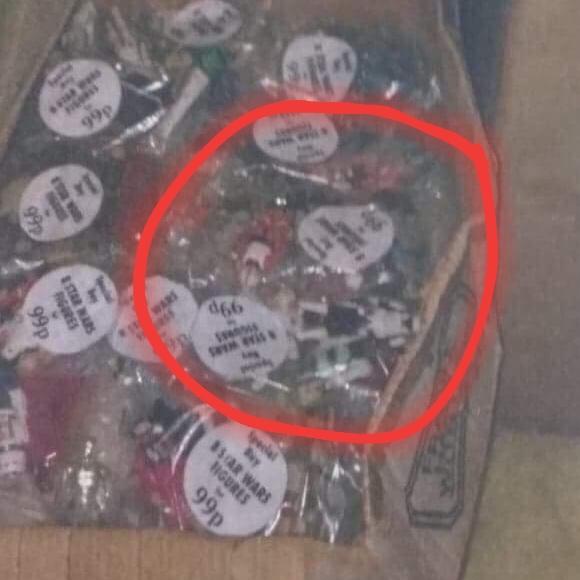
 ) and i have 6 packs sitting at UKG since May without a decision there is around another 17 of these packs to my knowledge sitting with other collectors and Jeff i believe still has some , i have probably purchased around 10 or 12 directly from Jeff with the rest being purchased from collectors in the community mostly graded.